

After being diagnosed with agoraphobia, I thought I should get to the library.
I’d been working as a freelance journalist and author for more than a decade, doing most of my work from home, rarely interacting with other humans beyond a phone call. I’d achieved the career success I’d dreamed of in my 20s, yet was wildly unhappy, growing anxious and paranoid in my isolation.
The psychologist who diagnosed me with agoraphobia noted how much I lit up when reflecting on the freewheelin’ days of my youth in Denver, surrounded by broke weirdos making art without ambition, nourished by the kind of intimate friendships you only get in your 20s. Back then I couldn’t even afford a computer, but I’d memorized my library card number, typing it into one of the Central Library’s desktops every morning, where I’d write short stories, essays, long-winded letters to friends, or Google things like “how to build a writing career with no experience or education.”
I’d never set foot in a college classroom, and never even finished high school.
I’d moved to Denver from rural Iowa in 2004 with no money or contacts, but brought with me an overflowing wellspring of passion and curiosity, which was nurtured by the Denver library. While my nights were occupied by sweating at DIY concerts in semi-abandoned warehouses, my days were spent at the Denver library computers, or buzzing through their endless bookshelves, brimming with all the vibrant curiosities I was denied throughout my evangelical conservative upbringing in the Midwest.
Denver’s Central Library closed for renovations in 2020, and in that time I patronized the $2.1 billion coworking space industry, renting a desk at Shift Workspaces at 10th and Bannock for $500 a month. The desk was in a shared space with two other people—an accountant and a civil engineer—who, like me, kept their headphones in and never made eye-contact with each other. Beyond the free coffee and cucumber water, I couldn’t understand what I was paying $500 a month for; I certainly wasn’t getting the human interaction prescribed by my therapist.
But with the library closed there were few options for a public place to work.
Back in the 2000s, I’d often stay up all night reading or writing at places like Cafe Netherworld, Paris on the Platte, Tom’s Diner (where I also worked as a server), The Breakfast King, or The Denver Diner, rarely spending more than $5. All of these little treasures are now gone, and regularly working at any of Denver’s coffee shops or restaurants today would cost you more than $500 a month.
I eventually stopped paying for a desk at Shift and returned to my lonely Howard Hughes existence working from home. By November 2024 I had nearly spiraled into an abyss of madness from the isolation (not quite the collecting-jars-of-urine stage Hughes reached, but getting there) when I learned that Denver’s Central Library had completed their four-year renovation and was celebrating its grand opening.
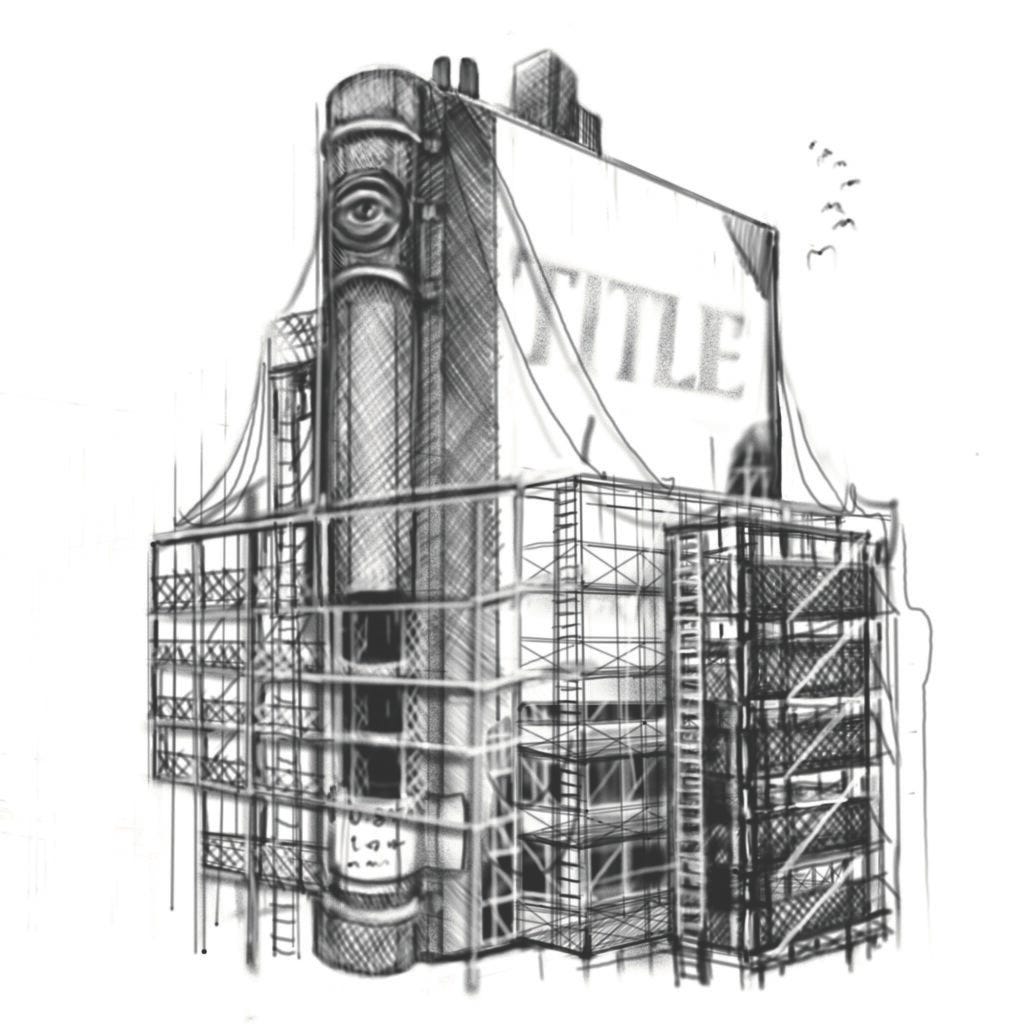
Illustrations by Casey Rooney.
Re-entering the building, I marveled at the $60 million facelift my beloved library had undergone: The double grand staircases, gender-neutral bathrooms, the charging stations, fifteen private workspaces, endless resources for the homeless, and a new event space overlooking Civic Center Park.
I was also flooded with memories of all the library staff who’d enthusiastically midwifed my curiosity-fueled self-education throughout my 20s: the esoteric books and foreign films shipped in for me on interlibrary loans, the screenings and accompanying lectures from film critic Walter Chaw, being guided to The Great Courses section by a young shelver I had a crush on, where lecture series from professors at Harvard, Yale, and Sarah Lawrence were available on CD, free of charge.
Despite warm memories tickling my heart, the sensory stimulation of chattering voices, squeaking shoes, and strangers with seemingly no spatial awareness roused a loud protest from my agoraphobic mind. Before I had the chance to spiral into a panic attack, I was soothed by random encounters with familiar faces, like Colorado Matters adorably charming host, Ryan Warner (who’d given my career multiple boosts when having me on his show), or former Colorado Creative Industries director Sheila Sears, who’d championed my art and literature magazine Suspect Press and helped keep us alive for several years.
In the following months I would return to the Central Library several times a week, bringing a thermos of coffee and a homemade salad into one of their cozy workspaces—or at one of the third-floor desks next to the south-facing windows, soaking up warm sunshine during throughout the bitterly cold winter—all free of charge. I was soon joined by fellow freelancers going crazy in their bedroom offices, establishing weekly coworking meetups. Even when working alone, I would often bump into friends and colleagues I hadn’t seen in years, chat with security guards or librarians about why Blu-rays are superior to streaming, or what books the Christian right is currently trying to ban.
Even the smallest interactions satisfied my evolutionary necessity of human contact. Below the conscious regions of our brains lie mechanisms that assess one’s safety by reading the facial expressions of those around us, the absence of which can lead to a low-grade hum of anxiety that gradually increases the longer we go without socializing.
While lounging in one of the library’s comfy reading chairs last February, I encountered an Atlantic article by Derek Thompson called “The Anti-Social Century,” which revealed that the hermetic lifestyle I’d fallen into was far from unique. Americans are more isolated today than at any time in our history–more likely to eat Grubhub alone instead of dining with friends, reluctant to start relationships, enroll in social clubs, or volunteer to help those in need.
“Self-imposed solitude might just be the most important social fact of the 21st century in America,” writes Thompson. “The individual preference for solitude, scaled up across society and exercised repeatedly over time, is rewiring America’s civic and psychic identity. And the consequences are far-reaching—for our happiness, our communities, our politics, and even our understanding of reality.”
The pandemic would be an obvious culprit for this, and while isolation did rise at that time, the increase continued for years afterward. Thompson’s article dates the real beginning of this loneliness trend to the 1970s, in part due to the rise of television over movie theaters, and the domination of cars over public transportation, but also to the decline of investment in public spaces like parks, open music venues, swimming pools, and libraries.
Throughout the first half of the 20th century, our tax dollars helped build social venues accessible to all citizens, regardless of income, particularly during FDR’s four-term presidency, when “the New Deal made America’s branch-library system the envy of the world,” writes Thompson.
The cuts to these programs in the 1970s were accelerated by the Reagan administration in the following decade, which also reduced or eliminated funding for mental healthcare, social services, and low-income housing, leading to a doubling in America’s homeless population.
This crisis has only worsened in the decades since, as 63% of Americans can’t afford to buy a home. During my early days at the Denver library, I was renting a small room at Colfax and Ogden for $100 a month; today the average one bedroom in Denver rents for around $1,650 a month.
In recent years libraries have become de facto homeless shelters, with librarians receiving training on naloxone administration and crisis intervention. Interacting with homeless people is now an inextricable part of the library experience, and while this can be stressful for library employees, it’s rarely more than a minor inconvenience for myself. I always make a point to say hello, make eye-contact, and, if they respond, to have a brief chat with them. I may not be able to restore essential social services to government budgets, but I can at least offer a small taste of human interaction, whose absence I understand all too well.
After working at the library these last few months, I began to realize how coworking spaces can get away with charging $500 for what the library gives away for free (more, actually, as private rooms at Shift Workspaces cost $800 a month). It’s the same service offered by expensive universities and gated country clubs: the assurance that your fragile consciousness won’t be troubled by the presence of humans struggling on a lower rung of the economic ladder.
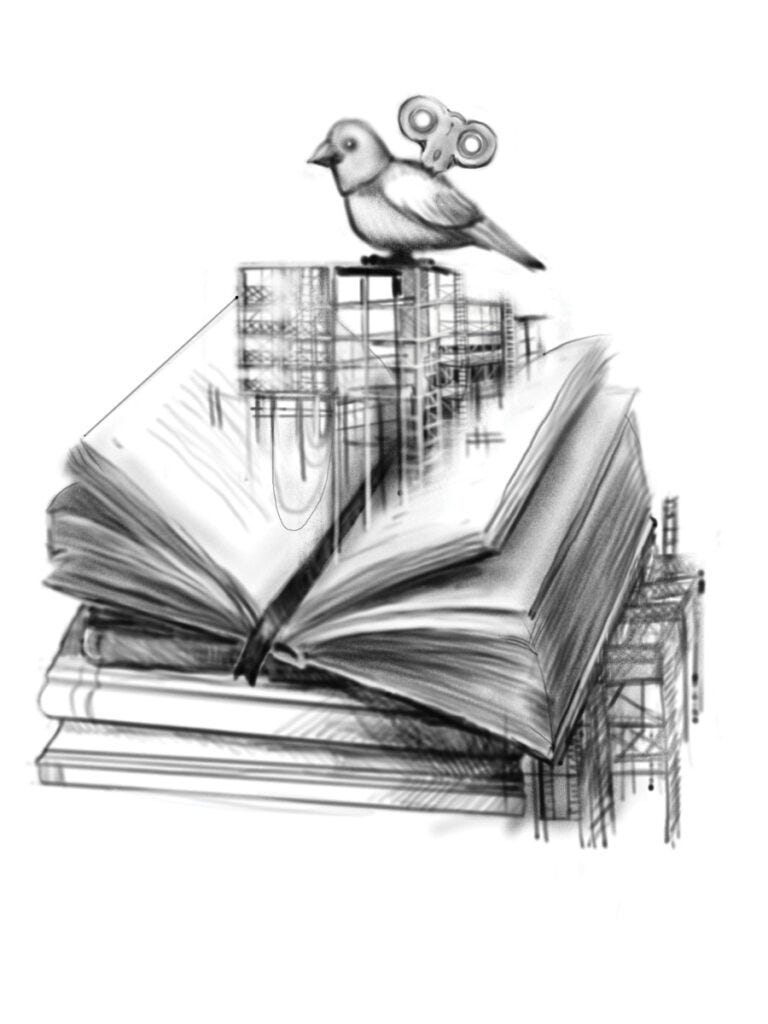
It’s the same championing of rugged individualism over collective prosperity that drove Americans to vote conservatives into power, lowering taxes and cutting funding for public spaces like libraries.
I often receive praise from conservatives for being an autodidact who never went to college, as this bolsters their culture war campaign of discrediting higher education and pandering to the working class (despite the fact that most GOP leadership attended Ivy League universities).
The history of American libraries has some roots in this type of thinking.
A generation before FDR made our public athenaeum network “the envy of the world” in the 1930s, the first wave of library proliferation was funded by Gilded Age tycoon Andrew Carnegie. Between 1883 and 1929, Carnegie funded the construction of more than 2,500 libraries, including nearly 1,7oo in the U.S. and 35 in Colorado.
It should be no surprise one of the richest men in American history was a bit of a prick, writing in his essay The Best Fields For Philanthropy that support should only be offered to “the industrious and ambitious; not those who need everything done for them, but those who, being most anxious and able to help themselves, deserve and will be benefited by help from others.”
Like myself, Carnegie came from poverty and was self-taught in his endeavors.
Though while Carnegie viewed these details as the summation of his career narrative, creating a “self-made” mythology that would snowball into the elusive “American Dream,” I attribute much of my career success to a network of social services that not only gave my family food and heat assistance as a child, but also gave me free access to books when I couldn’t afford to go to college, access to the internet when I couldn’t afford a computer, and a venue to socialize and network with others in my field without being charged $500 a month (which, in the early years of my writing career, would’ve been twice my income).
While Andrew Carnegie is likely rolling in his solid-gold coffin over libraries becoming the social safety net for what he would surely deem as “those who need everything done for them,” I believe it is short-sighted to dismiss unhoused people as not being “industrious or ambitious.” Because simply surviving on the streets actually requires a fuck-ton of hard work.
Carnegie’s self-made narrative neglects to mention the number of people who opened doors for him—and gave him access to essential volumes of reading material—along the way, as well as the time he lived in, when an absence of income tax, workers rights, and antitrust lawyers created the wealthiest group of men in U.S. history.
While I spent a few nights on the street or in otherwise unsafe environments, for the most part I had the support of a few friends and family members preventing me from sinking too far into the economic swamps of sadness, the places that become increasingly difficult to pull yourself out of the longer you remain stuck there. So even though I was using the library to research and compose essays while others were using it to avoid heat-stroke, it was the same dynamic at work. I wanted to be a writer. Someone else wanted to find a drinking fountain.
I grew up in a class without access to higher education and a culture that didn’t champion it. So I wound up at the library instead; and, looking back, I’m grateful that this was my destiny.